Holes & damaged board
For wall patching or hole repair, describe the approximate size and position of the damage. A small impact and a larger section of damaged board may call for different preparation and support.
Coquitlam, British Columbia · Project planning
Plan a Coquitlam wall patch around the opening, preceding trade work, existing texture and repainting boundary. Identify what must stay accessible before closing.
Tell us about your project Explore the scopeProject information and enquiries · Contractor scope, coverage and availability must be confirmed separately
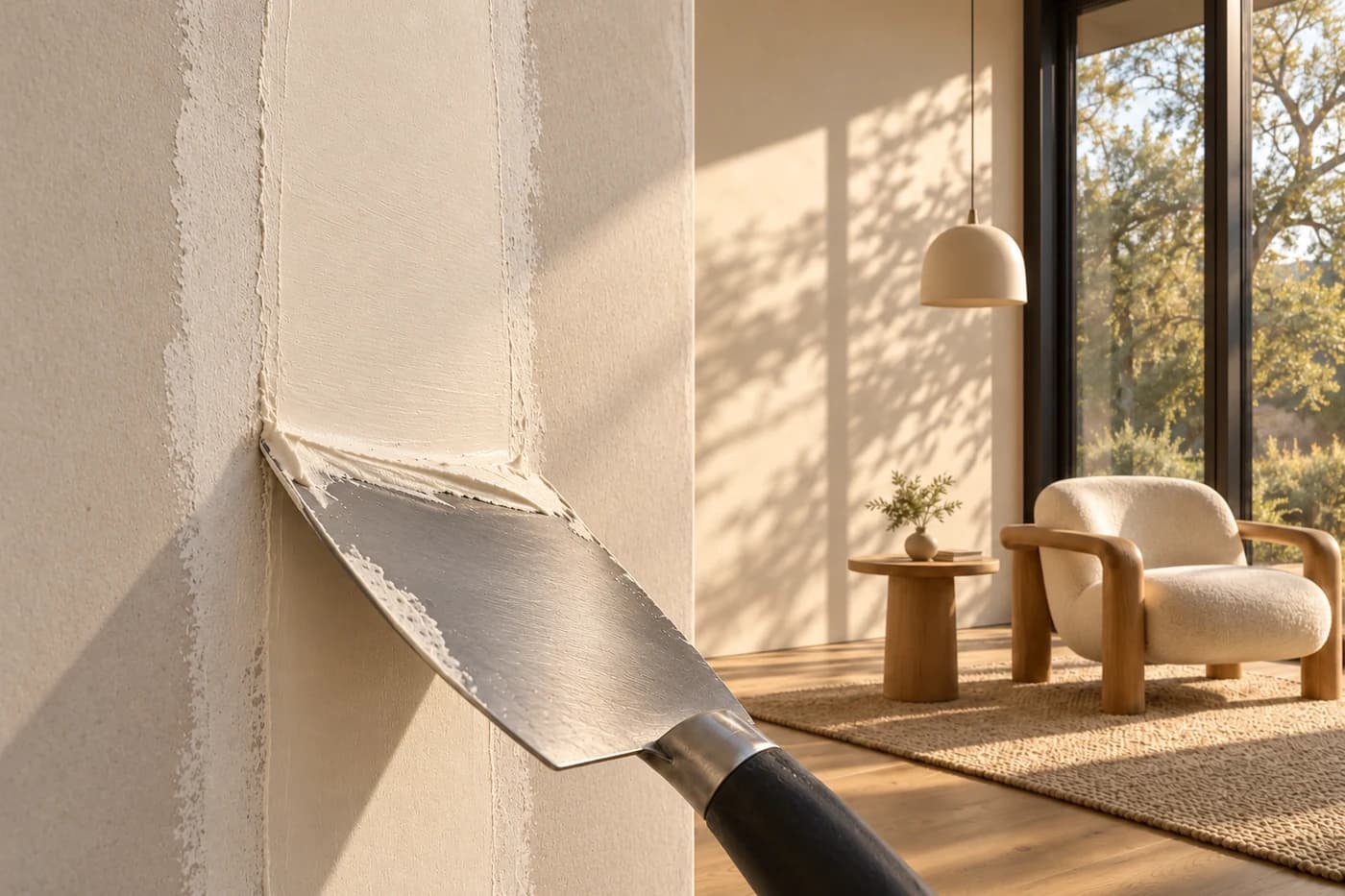
01 / Understand the scope
An opening after another trade, a dent, a recurring crack and a stained ceiling need different questions. Start with what you can observe and identify the unknowns before choosing a cosmetic solution.
For wall patching or hole repair, describe the approximate size and position of the damage. A small impact and a larger section of damaged board may call for different preparation and support.
Note whether a crack is new, recurring or associated with movement or moisture. The cause may need attention before a cosmetic repair can be considered.
Describe the existing texture, lighting and planned decoration. Matching the surrounding surface and agreeing the paint handover matter as much as the patch itself.
Use these prompts to agree inclusions. They describe decisions to make, rather than a promise that every item is offered.
Agree in the estimateThe inspected area, repair method to be agreed and treatment of surrounding edges.
Clarify separatelyHidden damage, unrelated areas and conditions outside the agreed assessment.
Agree in the estimateKnown history, unresolved conditions and any prerequisites for finishing.
Clarify separatelyLeak detection, structural assessment, drying or remediation by other appropriate specialists.
Agree in the estimateExisting texture, the transition into adjacent surfaces and realistic finish expectations.
Clarify separatelyA guaranteed invisible match, full-wall repainting or texture removal unless agreed.
Agree in the estimateOccupied-room protection, access, waste handling and the decorating boundary.
Clarify separatelyFurniture relocation, primer, paint or work by another trade unless included.
02 / The work sequence
These are the decisions to discuss before work. The appropriate assessment and repair method depend on the actual condition, rather than the size of a mark alone.
The project processNote the location, approximate dimensions and when the damage appeared. Explain whether the area has changed, returned after an earlier repair or followed other work.
Decision to recordSeparate visible damage from an assumed cause.
Tell the contractor about known leaks, movement or unresolved conditions. Identify whether another assessment or trade is needed before a finish can be discussed.
Decision to recordRecord what must be resolved before cosmetic work.
Discuss the affected surface, the surrounding board and how the work will meet the existing finish. Ask what could change after the area is assessed.
Decision to recordAgree the repair boundary and how changes are approved.
Review the existing texture, paint and lighting. State whether the handover stops at the prepared patch or includes separately agreed decorating work.
Decision to recordDescribe the achievable finish and its limitations.
03 / A useful starting brief
You do not need every answer before starting a conversation. Describe what you know and make the unknowns clear.
Include when the damage appeared, whether it is changing and any previous repairs. Say when the cause is unknown.
Give approximate dimensions and the location on the wall or ceiling. Mention nearby corners, fixtures and openings.
Note access, furniture, room use and whether anyone needs to keep using the space during the proposed work.
Say whether the surface is smooth or textured and whether repainting is planned. Flag a strong window or light falling across the area.
04 / The estimate conversation
A small visible mark does not describe the whole job. Setup, the condition around the damage and the agreed finish can matter as much as the patch dimensions.
No contractor rates or minimum-job policy are advertised. Confirm the actual provider and written scope before comparing prices.
Describe your projectA wall opening, ceiling damage and a repair beside a corner have different access and boundary questions.
Known leaks, recurring cracks and unknown hidden conditions need to be disclosed before a cosmetic scope is agreed.
Describe texture, previous coatings and whether the surrounding surface will be decorated afterward.
State whether the room is occupied, what needs protection and how the work area can be reached.
Compare the same repair, preparation, cleanup and primer or paint boundary in each estimate.
05 / Useful to know
General planning guidance. The actual condition, inclusions and finish expectations need to be agreed for your project.
The existing surface, texture, lighting and subsequent decorating affect how a repair reads. The contractor needs to inspect the area before agreeing the achievable finish and any limits.
Mention the leak and whether its source has been addressed. Drywall finishing is not a substitute for finding the cause or assessing hidden moisture. Any drying, remediation or other trade work needs a separate appropriate assessment.
The visible dimensions alone cannot decide that. Describe the condition and let the contractor assess the repair boundary, surrounding material and suitable method before agreeing local repair or replacement.
Explain the height, approximate affected area, existing texture, nearby fixtures and any history of a leak or recurring damage. Identify the unknowns and whether the cause has been assessed.
Check that they describe the same repair area, protection, preparation, finish expectations, cleanup and decorating boundary. Ask how any hidden conditions and changes would be documented and approved.
Read the detail
A practical framework for discussing drywall patching versus replacement, recurring cracks, damaged edges, moisture history and matching the surrounding finish.
Existing surfaces5 min readOrganize the handover from leak investigation and drying to drywall reinstatement: cause, affected materials, closure readiness, responsible people and finish scope.
Existing surfaces5 min readPlan drywall repairs after another trade opens a wall: final opening sizes, trade completion, required checks, access needs, assembly details and decorating boundaries.
The project in Coquitlam
For an opening left after a repair behind the wall, begin with the handover from the preceding trade. State the opening size and surrounding surface, whether the cause is resolved and whether anything still needs access before a patch is planned.
Let’s start with your space
Tell us about your repairs project in Coquitlam. Mustafa, the website operator, receives your project details at mustafa9605@gmail.com for follow-up. A contractor and service availability have not been confirmed. Sending an enquiry does not book work or promise a response time.